Major projects are on the horizon.
Capital improvements are upgrades or enhancements to physical property that increase its usefulness or extend its useful life. The budget for capital improvements for the City of Plant City is $27,868,000, which is 19 percent of the year’s $147,883,000 budget. In some cases, money is put away to pay for a project that will commence in the future. The following are higher-dollar improvements coming Plant City’s way.
In January, City Commissioners enthusiastically voted 5-0 to proceed with renovating and expanding Bruton Memorial Library. The updated cost of the project is $16,400,000, and the completion is slated for 2029. The intended sources for funding are:
• Impact Fees – $2,600,000
• Mobility Impact Fees – $1,500,000
• Community Investment Tax – $5,000,000
• General Fund – $7,300,000
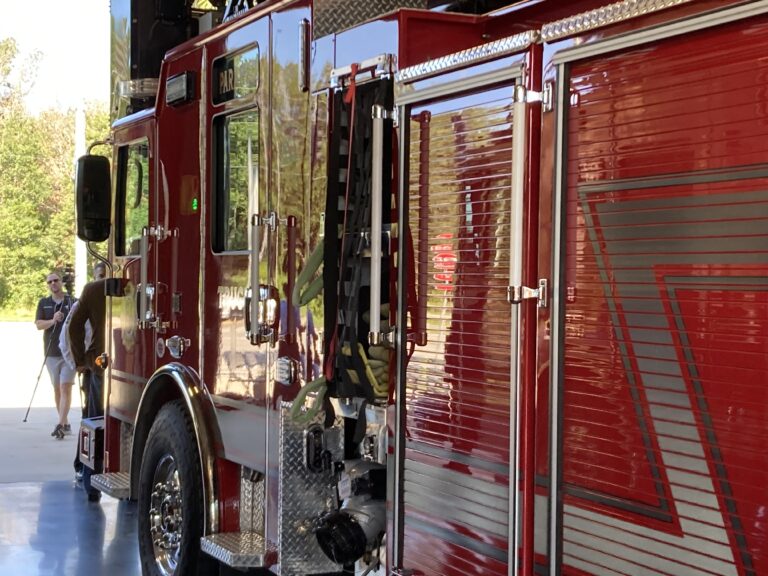
Another major future project is to build a new fire station to address the increased need in Plant City due to population and business growth. Plant City Fire Rescue currently operates from three fire stations. The new one will allow for four smaller response areas to reduce response time, which will support meeting National Fire Protection Association standards. The upgraded response capabilities could help reduce insurance premiums for businesses and residents. The city plans to bank money each year until 2030 to pay $3.2 million for the project without incurring debt. There is currently $500,000 in the kitty.
City government has a strategy of rotating street resurfacing so that each street is rehabilitated every seven years. The city’s property taxes include 1 mill to supply the $5 million each year to make smooth streets and lower front end alignment bills a reality.
The Utilities Operations Department has annual projects to repair, paint, restore, and coat large concrete storage tanks, and repair components at the Water Reclamation Facility (WRF) to extend their service lives to save money. State regulations require the tanks to be cleaned and inspected every five years, with a comprehensive rehabilitation completed every 10 years. Over the next five years, the maintenance budget adds up to $2.7 million.
Also, for the WRF, one task of the Utilities Maintenance Department is to repair, replace, rehabilitate, and upgrade its electrical and mechanical systems. The point is that the maintenance is far less expensive than buying something new. The funds can also be used for engineering, construction, installation, and related services. The five-year budget for this work is $7.8 million.
The life expectancy of a playground is around 15 years. Older playgrounds need replacement pieces and upgrades to keep the equipment safe and working. In some cases, repairing equipment is more expensive than the dollar value of the playground. New playgrounds with normal equipment and fall-zone safety surfacing cost $300,000 to $560,000. So, the best course is often to replace the whole playground with brand new equipment. More than $255,000 is in the bank, and an additional $1.6 million will be allocated to the fund over the next four years.