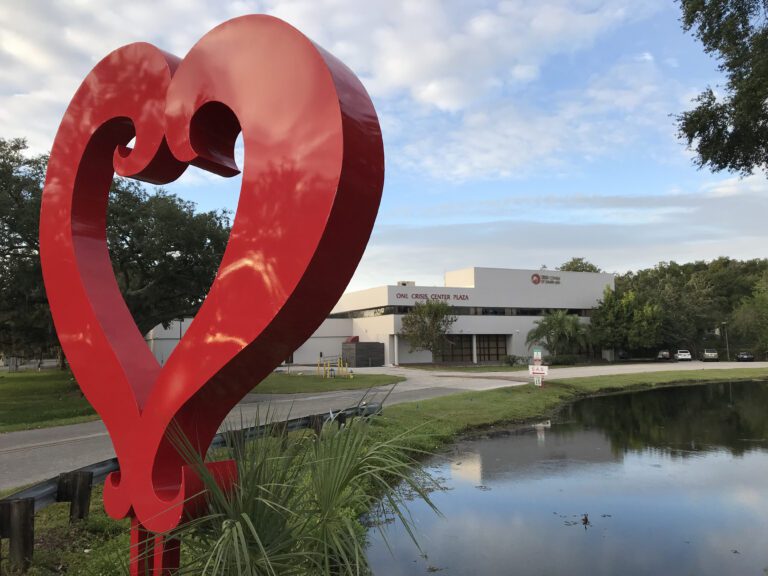
Plant City residents facing a personal crisis now have another place to turn for help, with a new partnership bringing in-person support and resource navigation services to the community each week.
The Crisis Center of Tampa Bay has partnered with The Spring of Tampa Bay to provide the services at The Spring’s office, 701 Tillman Place. A Crisis Center representative will be available each Wednesday to meet with residents, assess their needs and connect them with appropriate resources.
The outreach is designed to make assistance easier to access, particularly for people who may not know where to turn during a difficult time. Needs may range from food, clothing and shelter to emotional support, counseling and help navigating other community services.
Clara Reynolds, CEO of the Crisis Center of Tampa Bay, said the organization hopes to establish a lasting presence in Plant City. For now, the weekly visits will help the center better understand the community’s needs while working alongside organizations already providing assistance.
The partnership grew out of conversations that began in October 2025, when State Attorney Suzy Lopez raised concerns about the need for victim advocacy and crisis support in a growing Plant City. Lopez connected Reynolds with Vice Mayor Jason Jones, setting in motion conversations with city leaders, including Mayor Nathan Kilton, City Manager Bill McDaniel and Police Chief Richard Mills Jr., as well as leaders at The Spring of Tampa Bay.
Their collaboration helped bring the weekly outreach services to Plant City. Reynolds also recognized the United Food Bank of Plant City for its support.
The timing carries particular weight for a community that has endured two devastating family tragedies this year. The deaths have left loved ones, friends and neighbors grieving and searching for answers. Reynolds said the most recent tragedy this month has deeply affected Plant City, in part because so many residents knew the family.
Although the partnership was being discussed long before the latest tragedy, Reynolds said the center wants residents to know help is available and that no one has to navigate difficult circumstances alone.
The Crisis Center’s services extend beyond immediate emotional emergencies. Through its Gateway Contact Center, the organization provides a suicide prevention and crisis lifeline through 988, as well as information about community resources through 211. Other services include trauma counseling, sexual assault survivor services, family support programs and transportation assistance.
Residents can call 211 to speak with a specialist who can assess their circumstances and help identify appropriate assistance. The center maintains a database of more than 3,000 resources.
The service is available regardless of a person’s ability to pay, Reynolds said.
The organization also wants residents to recognize warning signs that someone may be struggling emotionally. Statements about suicide or not wanting to be alive should always be taken seriously, Reynolds said. Other potential warning signs include withdrawing from friends and family, losing interest in activities someone once enjoyed or using substances more frequently than usual.
She encourages people who are concerned about someone to ask directly about suicide rather than avoid the subject out of discomfort.
“By using that word, it tells that person who’s struggling they know you see them,” Reynolds said.
For residents personally affected by recent events, Reynolds emphasized that there is no single right way to process grief, fear or other emotions. Talking with family, friends, a spiritual leader or a crisis specialist can help. If those feelings begin interfering with daily activities, she encouraged people to seek help regardless of their financial circumstances.
“Please know if you get that niggling in your gut that something is wrong, listen to it,” she said. “Call us.”
Mindy Murphy, president and CEO of The Spring of Tampa Bay, said sharing space and resources makes it easier for people experiencing a crisis to find assistance.
“Reaching out for help is one of the hardest things a person in crisis will ever do, and it should never be made harder by not knowing where to turn,” Murphy said in a statement. “When our organizations share a space and a purpose, a family in Plant City has one more door open and one less barrier to walk through.”
Mills described the partnership as an extension of public safety efforts beyond responding to tragedy, but how to prevent it.
“Following one of the most heartbreaking tragedies our community has ever experienced, I expressed my hope that if even one person or one family could be helped, perhaps some measure of purpose could emerge from such an unimaginable loss,” he said. “Through the compassion, dedication and collaboration of the Crisis Center of Tampa Bay, The Spring of Tampa Bay, State Attorney Suzy Lopez and our city leadership, that hope is becoming a reality. This partnership is about more than providing services; it is about providing hope, healing and a lifeline for those who need it most.”
Reynolds said the organization’s priority is making sure people know they have somewhere to turn before a difficult situation becomes a crisis.
“When we have strong human emotions, there’s a lot of power in being able to talk about those emotions with another human being,” she said.
Getting help: Residents seeking resources and emotional support can call 211, which connects callers with a live specialist 24 hours a day, who can schedule appointments to meet with a Crisis Center representative on Wednesdays at The Spring of Tampa Bay’s Plant City office. To reach its suicide and crisis lifeline, dial 988. More information is available at crisiscenter.com. The Spring’s 24-hour domestic violence hotline is (813) 247-7233.